This sits inside TrustVision's first layer, onboarding, and hands off to fraud prevention. See how all three layers fit in the full TrustVision overview.
In this piece. There is no single Philippine ID. A lender's applicants show up with a PhilSys card, an old UMID, a PRC license, a postal ID, or whatever they happen to have in their wallet, and each one is built differently. Philippine ID verification has to answer the same four questions for all of them: can we read it, is it genuine, is it the person in front of us, and is that person actually there. Here is how TrustVision does that in a single capture, and what changes from one ID to the next.
The ID in front of you could be any one of a dozen
A rural bank in Iloilo opens its digital onboarding to new borrowers. On the first day, one applicant submits a PhilSys National ID. The next uses a UMID with a worn laminate from 2014. Another has only a PRC license, and another a postal ID photographed on a kitchen table under a yellow bulb.
None of these applicants is doing anything wrong. They are using the ID they have. But each card has a different layout, different security features and different fields, and an onboarding flow that only reads one or two of them well will decline good customers for the wrong reason.
That is the real problem behind Philippine ID verification. It is not checking one ID. It is checking whichever ID shows up, the same way, every time.
What Philippine ID verification actually checks
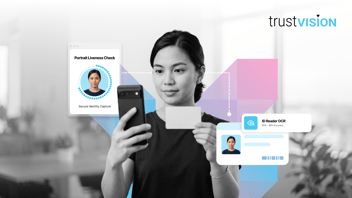
TrustVision asks four questions of every ID, in order, from the same ID photo and live face capture the customer submits once:
1. Can we read it? Image quality checks look for blur, glare, tilt, cropping, more than one card in frame, the wrong document, or a photocopy instead of the original. If the photo is the problem, the customer gets a retake prompt that says what to fix, not a silent decline.
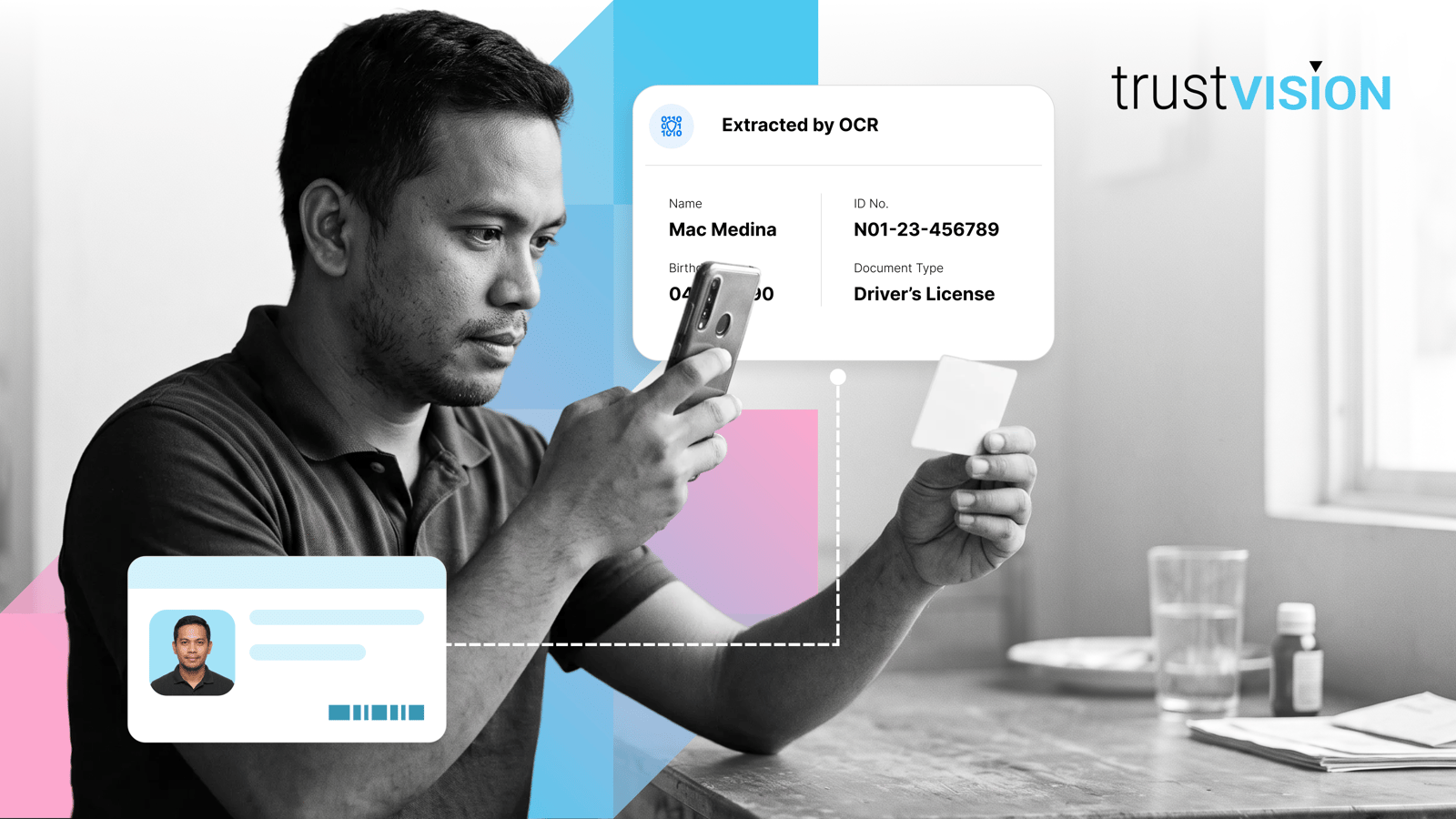
2. What does it say? OCR reads the name, ID number, birth date and address, separates first, middle and last name, and pre-fills the application form. On a driver's license, it reads ID numbers at 99% accuracy.
3. Is it genuine? The ID is checked for more than 20 signs of tampering: fonts that don't match, uneven character spacing, a portrait swapped in, a template that doesn't match the issuing agency's, and dates or numbers that contradict the card's own rules. Where the issuing agency has a database available, the ID is also validated against its records.
4. Is it the person, and are they really there? The live face is matched against the photo on the ID, and a liveness check, certified to ISO/IEC 30107-3 Level 2, confirms a real person is present rather than a printed photo, a screen, or a replayed video.
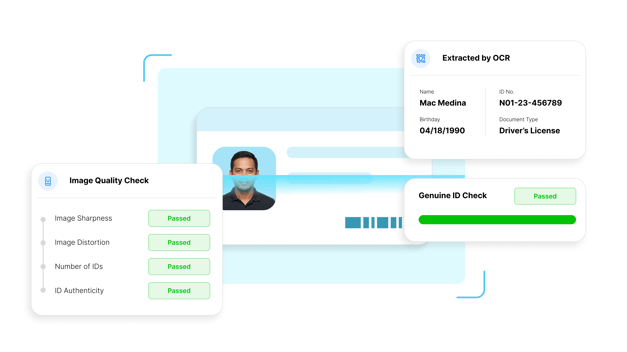
All four run seamlessly within one customer flow. The customer photographs one ID and takes one face capture, and that is all they see.
How to verify each Philippine ID
The four questions stay the same. What changes is whether the issuing agency gives you a way to confirm the ID.
• National ID (card, paper ePhilID, Digital National ID). BSP Memorandum No. M-2025-012 reminds BSP-supervised institutions to accept all recognized formats of the National ID as valid and sufficient proof of identity without requiring another ID. It can be authenticated through National ID Check (everify.gov.ph/check), or through the National ID Authentication Services for higher assurance.
• UMID, MySSS Card and GSIS Digital ID. As of November 2026, we found no government service for checking a UMID online, so lenders check the card and the person, and step up to the National ID when the risk calls for it. SSS now issues the MySSS Card in place of the UMID, and says previously issued UMIDs remain valid. See How Banks Verify a UMID.
• PRC ID. The Professional Regulation Commission offers online verification of professional licenses, which can back up the check on the card.
• Driver's license, passport and other government IDs. Verified the same way: read the card, check it for tampering, match the face and confirm liveness. Depending on risk, a lender may also ask for the National ID.
When a client needs an ID that is not on the list, the model can be trained on roughly 2,000 samples of that ID.
What this layer is, and what it isn't
It is ID verification: reading whichever Philippine ID a customer brings, confirming it hasn't been tampered with, and confirming the person holding it is the person on it.
It stops there on purpose. Checking whether that face has already applied under a different name belongs to fraud prevention. Using the same face to approve a transfer later belongs to transaction verification. And deciding whether the customer should get the loan belongs to your credit model.
The bottom line
Your customers will bring whatever ID they have. Philippine ID verification that only works on the newest card turns away the people who most need a lender to say yes. TrustVision reads them all, checks them the same way, and lets the right customers through.