Transaction Verification Without OTPs Transaction Integrity, Zero Compromise

TrustVision's advanced Face Authentication (FA) solution actively blocks every attack while ensuring only legitimate transactions push through. It’s the powerful, frictionless security layer your customers deserve.
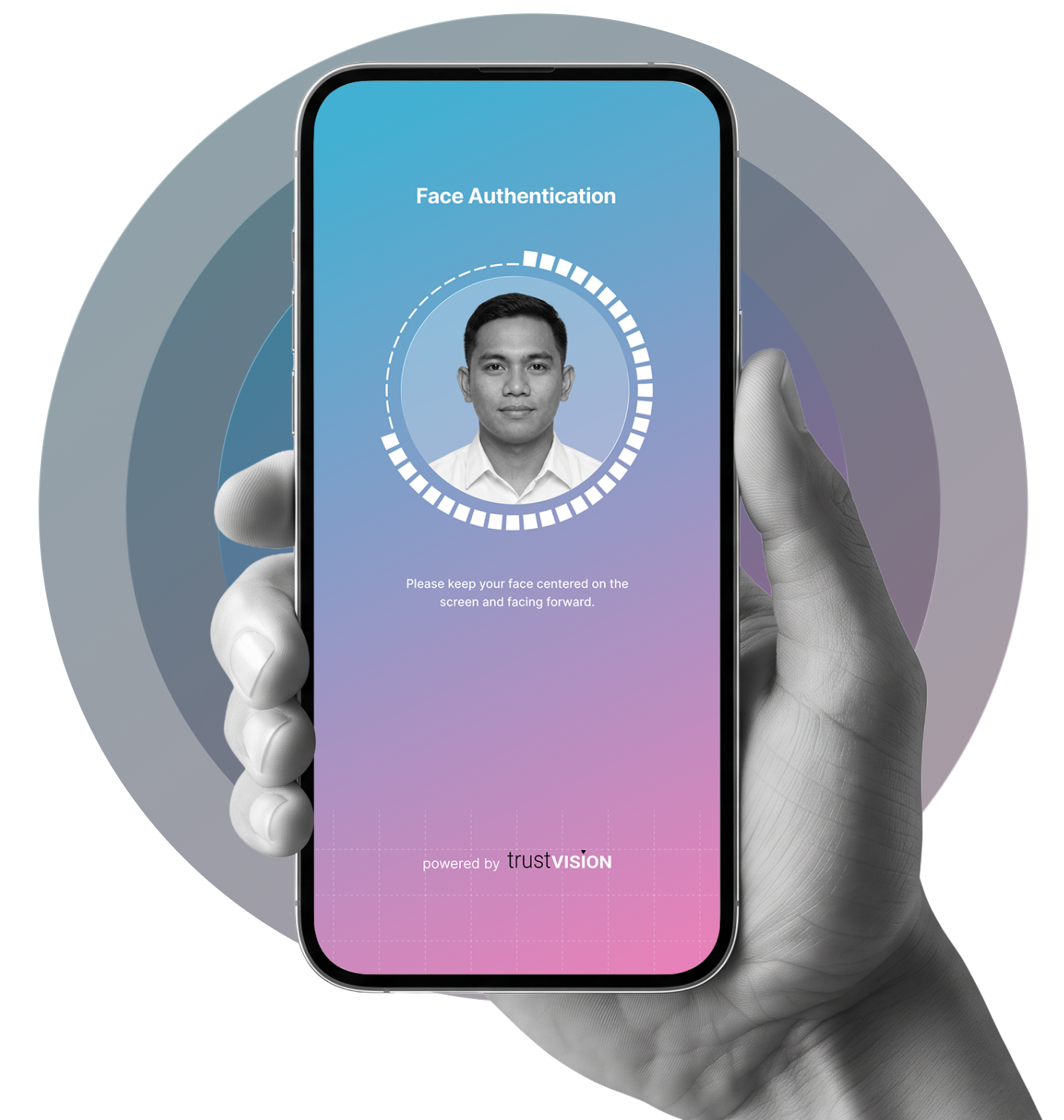
Hand holding a phone running a TrustVision face authentication check in place of an SMS OTP

Discover how TrustVision replaces OTPs with zero compromise.

This site is protected by reCAPTCHA and the Google Privacy Policy and Terms of Service apply.

trustvision-brochure

A code can be stolen. A live face cannot.

TrustVision Transaction Verification is biometric face authentication for logins and high-risk transactions, built as an alternative to SMS OTPs for Philippine banks, e-wallets and lenders. A liveness-checked face match confirms the account holder is present before a large transfer, a new payee or a device change goes through, stopping account takeover, transaction fraud and money-mule activity without adding friction for real customers.

Eliminate Unauthorized Access

Proprietary AI for zero-delay, regionally smart defense
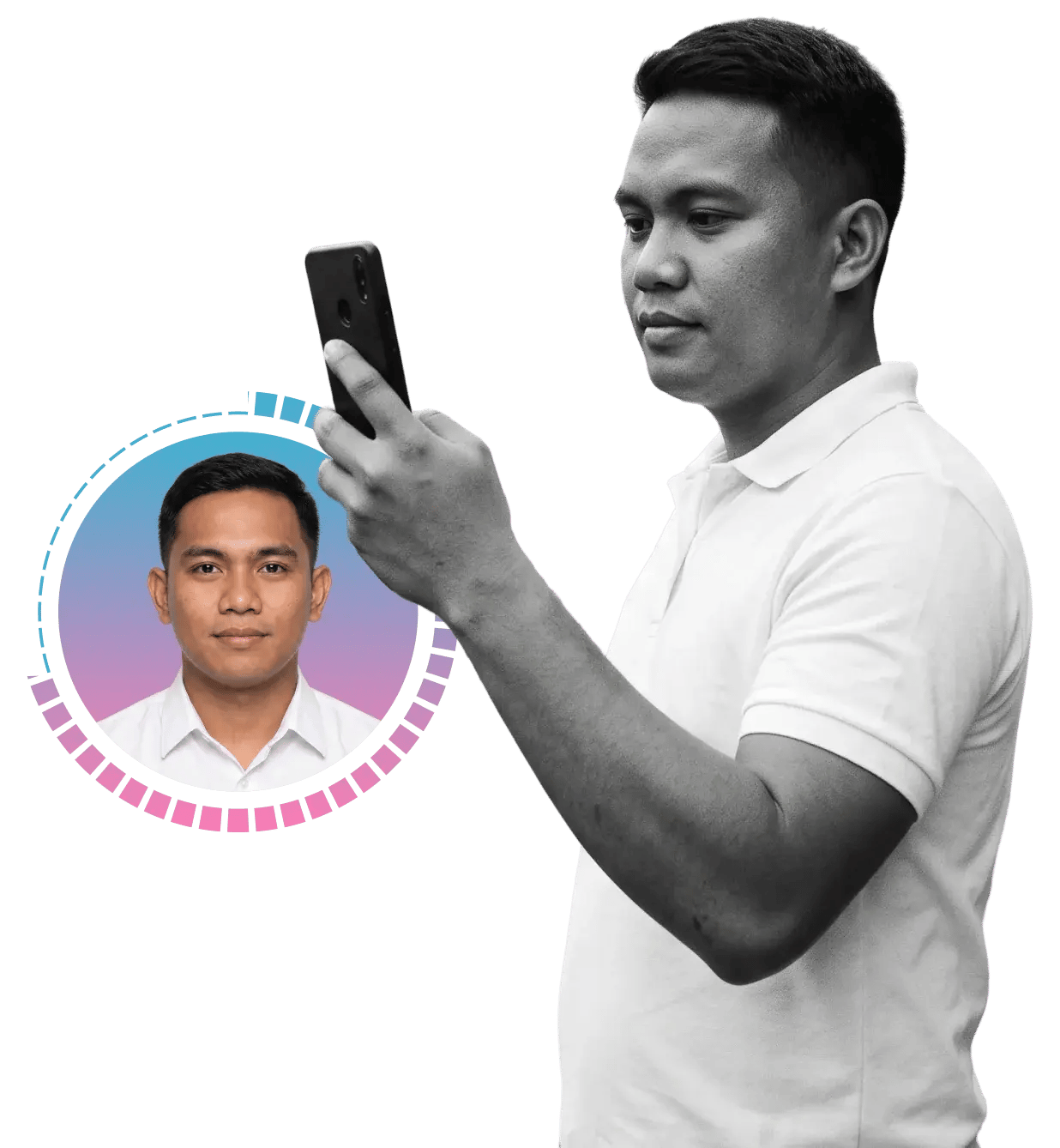
Customer authenticating a login with a TrustVision face match instead of an SMS OTP

Maximize Verified Transactions

Zero-friction, lightning-fast security prevents fraud from slowing business throughout
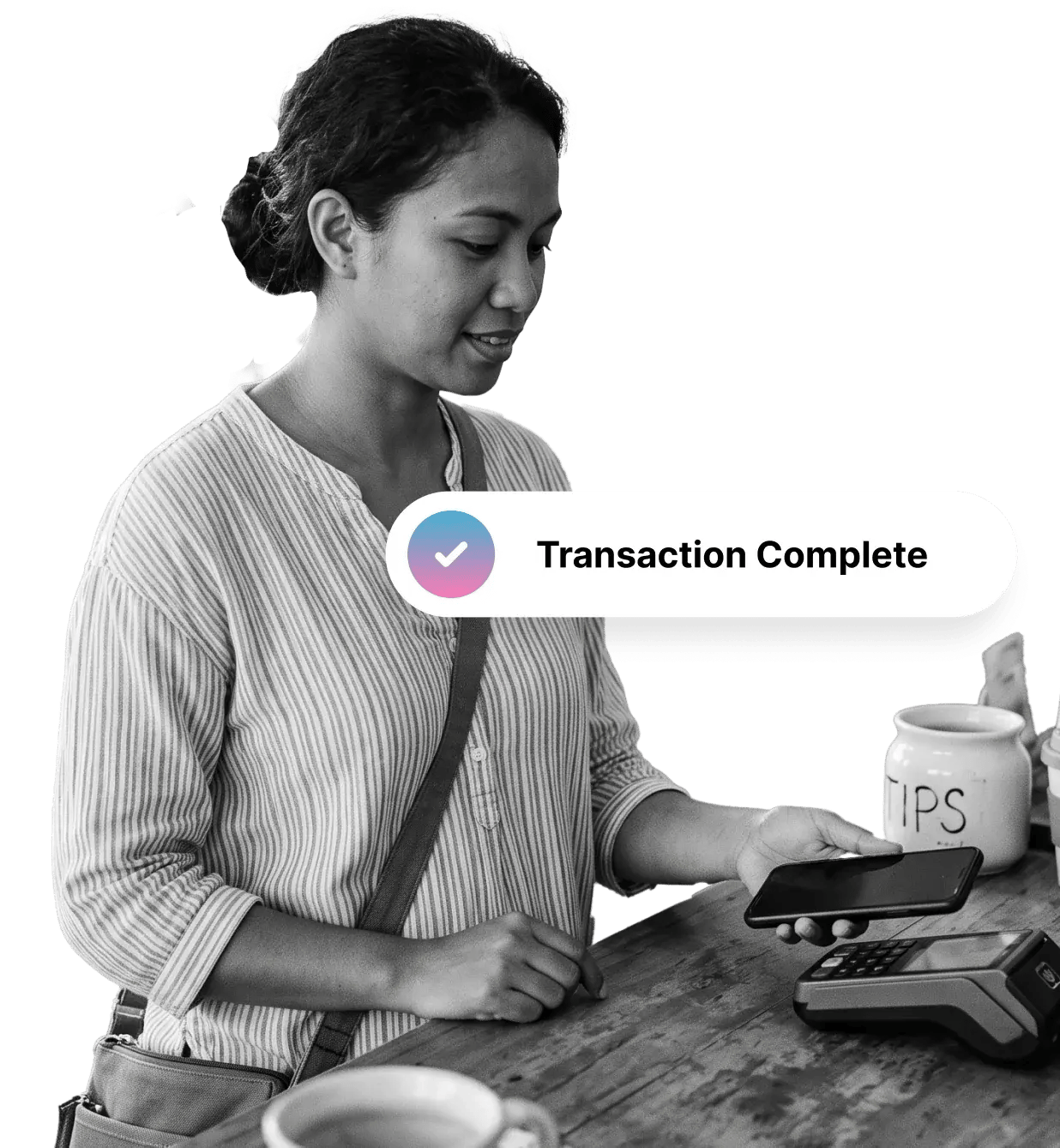
Customer completing a contactless payment after a TrustVision face check

Zero-Vulnerability Transactions

Instantly remove the security weaknesses and delays associated with traditional SMS OTPs.
Risk analyst reviewing transactions flagged by TrustVision advanced fraud detection
Transaction Verification

TrustVision’s advanced Face Authentication actively blocks every attack
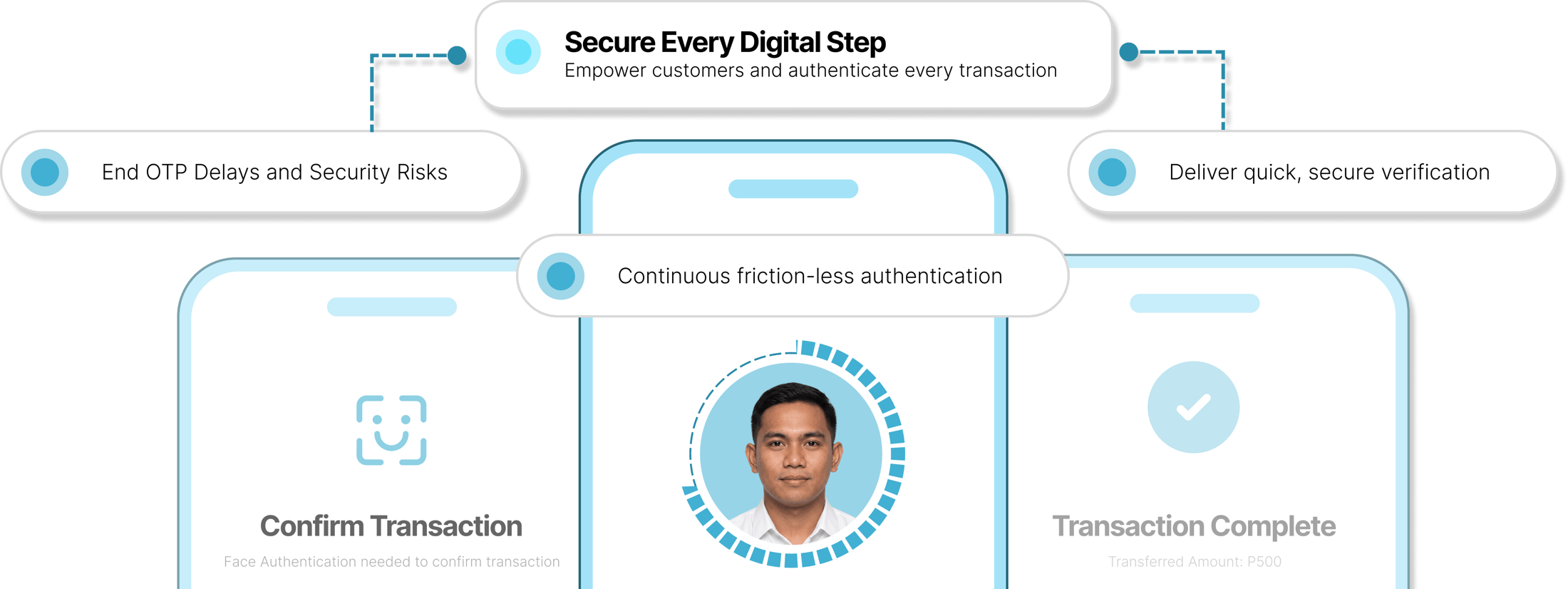
Nothing arrives by SMS, so there is nothing to intercept, phish, or read out to a stranger on the phone. You choose which actions trigger it — large transfers, new payees, device changes — and everything else stays exactly as fast as it was.
TrustVision transaction verification flow: confirming a transfer with a face authentication check instead of an SMS OTP
The TrustVision Expertise

High-Fidelity Security for Real-Time Financial Integrity

Face Registration

The system captures an onboarding image and extracts unique biometric measurements to establish a secure, mathematical identity for the user.

Face Authentication

A two-step verification that uses a liveness check to confirm physical presence before comparing the captured face against the registered biometric data.

Anomaly Detection

Our AI monitors behavior in real-time to identify and neutralize irregular patterns—such as non-human interactions or unauthorized access attempts—that deviate from established user profiles.


Face-match confirmation
Check for fraud & image quality
Advance fraud detection
Ultra - high accuracy
Flexible customization
Optimize efficiency
AFASA-ready authentication

Replace SMS OTP with face authentication, inside your own app

The Anti-Financial Account Scamming Act (AFASA, Republic Act No. 12010) makes money muling, social-engineering scams and the misuse of financial accounts criminal offences, and requires BSP-supervised institutions to strengthen fraud management and customer authentication. SMS one-time passwords, the control most Philippine banks still rely on, are exactly what scammers phish, SIM-swap and socially engineer their way around.

Face authentication changes the question from “do you have the code?” to “is the account holder actually here?”. TrustVision confirms the answer with an ISO/IEC 30107-certified liveness check and a match against the face registered at onboarding, then logs the decision. That is the kind of stronger authentication BSP Circular 1213 asks institutions to move toward, delivered inside your own app.
Liveness-checked face match

Every high-risk action requires a live face, not a stored photo or a replayed video, matched against the biometric template captured at onboarding.

Step-up, not always-on

Trigger face authentication only where the risk is: large transfers, new payees, device or SIM changes, credential resets. Everyday logins stay fast.

Account takeover stopped

A stolen password or intercepted OTP is useless without the account holder’s live face, which closes the door on phishing and SIM-swap attacks.

Audit-ready by design

Each authentication event is timestamped with its result, giving compliance the evidence trail AFASA and BSP examiners look for.

For online banking and e-wallets

Transaction fraud detection where the money actually moves

Online banking and e-wallets in the Philippines process millions of transfers a day, and every one of them is a target for account takeover, mule networks and unauthorised payments. TrustVision Transaction Verification sits inside the flow your customers already use, so security goes up while drop-off does not.
Face registration
A single onboarding capture, or the face already collected in eKYC, becomes the secure biometric template for every future check.
Face authentication
Liveness check first, then a match against the registered template, in about the time it takes to read an OTP.
Anomaly detection
Behavioural monitoring spots non-human interactions, unusual device or velocity patterns and other signals that deviate from the user’s profile.
Money-mule defence
Face-bound accounts make it far harder to open, hand over or operate mule accounts at scale, the pattern AFASA targets most directly.
Works alongside digital KYC onboarding and fraud prevention as the third layer of TrustVision.
Further reading

AFASA, OTPs and the future of authentication

Frequently Asked Questions

Transaction verification without OTPs, explained

What is AFASA?

The Anti-Financial Account Scamming Act (Republic Act No. 12010) is the Philippine law that criminalises money muling, social-engineering scams and the misuse of financial accounts, and requires BSP-supervised institutions to strengthen fraud management and customer authentication. TrustVision Transaction Verification is designed to meet those authentication expectations.

Why replace SMS OTPs?

One-time passwords are the weakest link in most account-takeover cases: they are phished, intercepted through SIM swaps or handed over under social engineering. A liveness-checked face match cannot be forwarded or read out over the phone, which is why regulators and banks are moving to biometric authentication for high-risk transactions.

Does face authentication slow customers down?
No. It is applied only to the actions you define as high-risk, such as large transfers, new payees or device changes, and the check itself takes about as long as reading an OTP. Everyday logins stay as fast as before, and drop-off typically falls because customers no longer wait for a text message.
Do customers need to enroll again?
Usually not. The face captured during eKYC onboarding can serve as the biometric template, so existing customers who have been through TrustVision digital KYC are already registered. For legacy customers, a one-time face registration inside your app is enough.
Can banks replace SMS OTP with face authentication?
Yes. BSP Circular 1213 tells supervised institutions to limit authentication that can be shared or intercepted, such as SMS and email OTPs, and lists biometric authentication, including facial recognition, among the stronger alternatives. TrustVision Transaction Verification replaces the OTP at high-risk moments with a liveness-checked face match, certified to ISO/IEC 30107, against the face registered at onboarding, inside your own app. See what else Circular 1213 asks for in our AFASA compliance checklist.

Book a Demo Today

No Sales Talk
Just Data Science at Work

This site is protected by reCAPTCHA and the Google Privacy Policy and Terms of Service apply.

Thank you! Our team will reach out within 1 business day.

Prefer to lock in a time now? You can schedule instantly below.