Biometric Credit Scoring See the Risk Your Data Can't

Powered by Trusting Social's proprietary computer vision, Vision Score is an independent risk layer validated on 1M+ real-world outcomes. Highly predictive. Tested for bias with every update. Built for the borrowers your model can't reach.
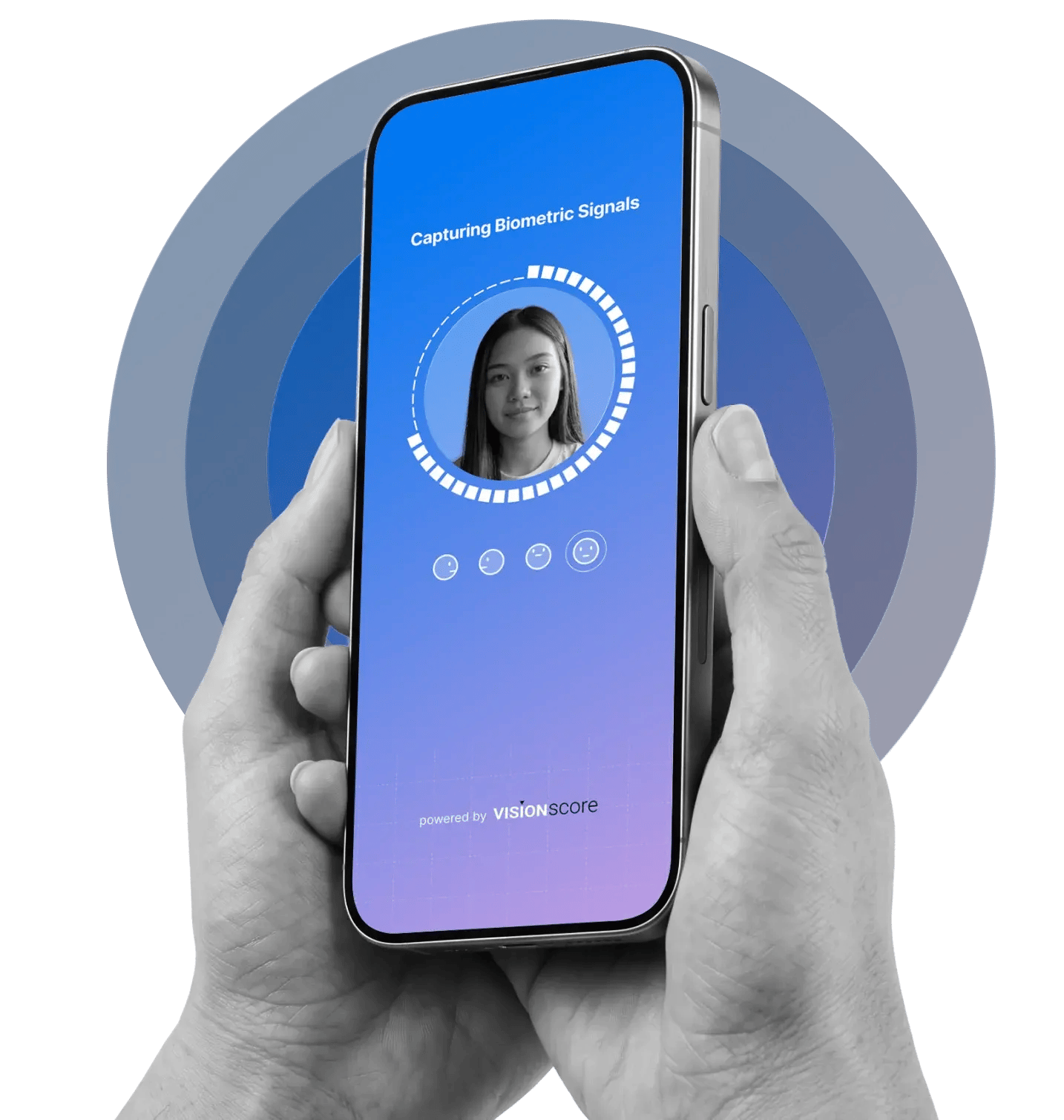
Vision Score capturing biometric signals from a face scan during a loan application on a mobile phone
Discover how VisionScore scores thin-file and no-file borrowers with no extra steps for the applicant.

This site is protected by reCAPTCHA and the Google Privacy Policy and Terms of Service apply.

vision-score-brochure

Your model knows their past. Vision Score reads their present.

Vision Score, by Trusting Social, is an AI credit scoring model that applies machine learning to the facial image already captured during digital onboarding, turning biometric signals into predictive credit analytics for Philippine lenders. Validated on 1M+ real loan outcomes, it scores thin-file and no-file borrowers with no extra steps for the applicant.
The Signal

Every borrower has an invisible signature

At the point of application, Vision Score captures real-time biometric signals—unique and invisible to traditional models
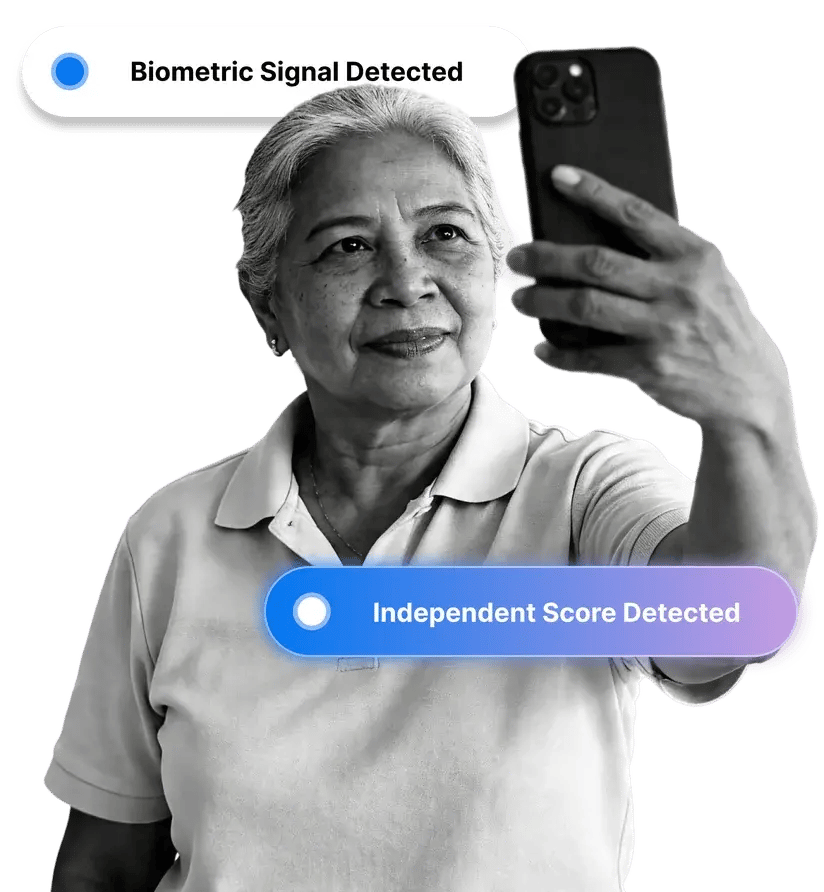
Older Filipina taking a selfie during a loan application as Vision Score detects a biometric signal and returns an independent score
The Proof

Identify risk that historical data misses

Vision Score flags hidden default risks in profiles that appear safe by every historical measure, reading the "present moment" signals that standard models were never built to see.
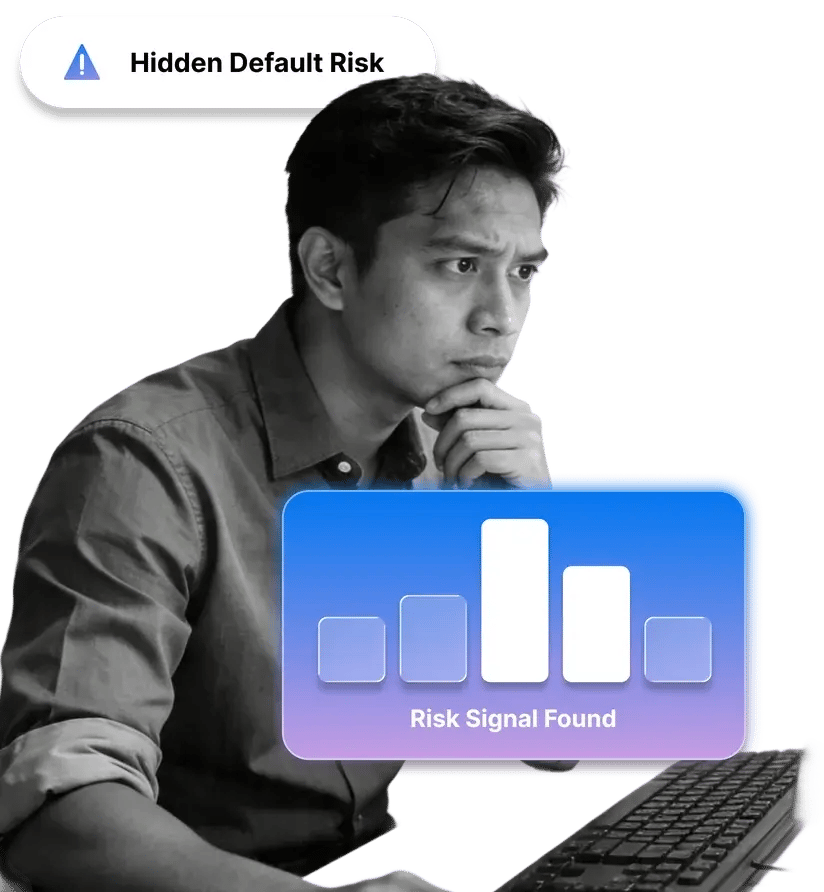
Credit analyst reviewing an application where Vision Score surfaced a hidden default risk
The Reach

Score the borrowers no one else can

For thin-file applicants, Vision Score reads the photo your onboarding already captures to generate a standalone risk score with no extra steps or infrastructure.
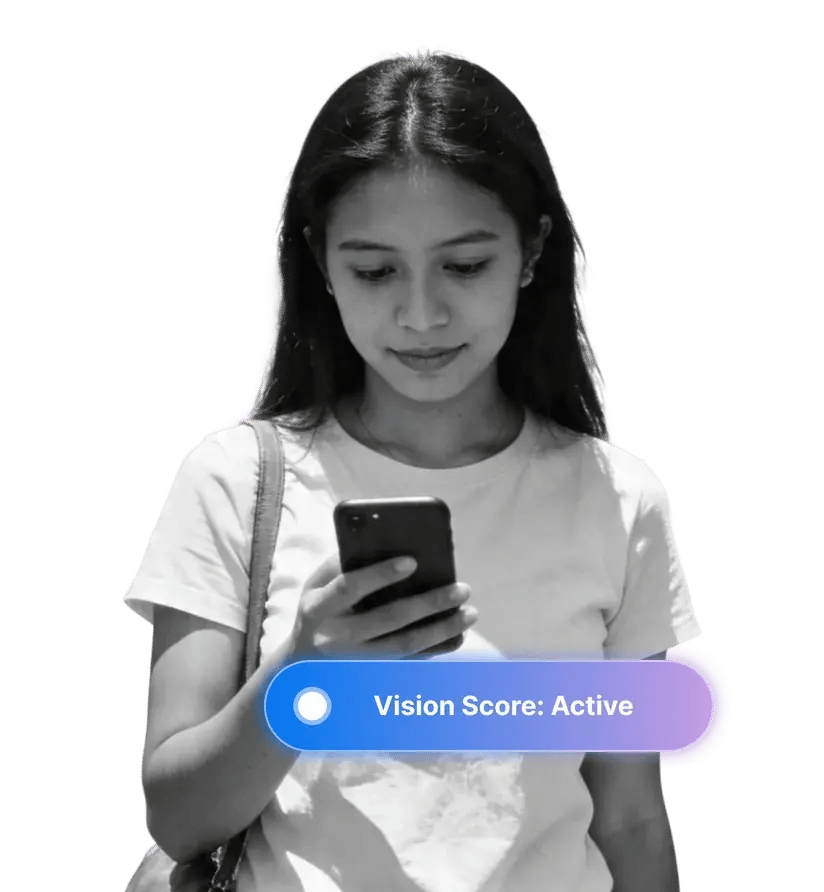
Young Filipina applying on her phone, a thin-file borrower Vision Score can assess
The Outcome

A more accurate, wider portfolio

By pairing historical data with real-time biometric signals, you surface hidden risk and score the "invisible" borrower. Fewer defaults, more approvals.

Older Filipino borrower approved after the lender combined their existing model with Vision Score
The AI Advantage

A new category of credit risk intelligence
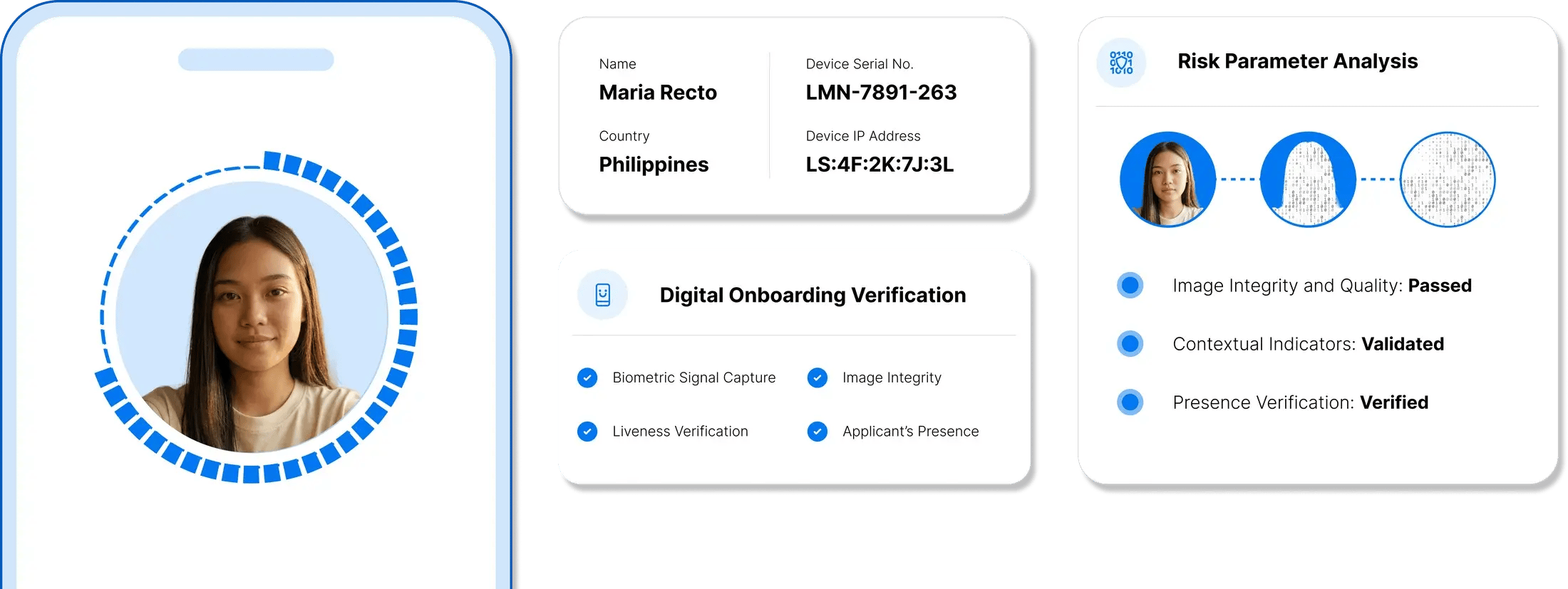
At the point of application, every borrower produces a biometric signal — unique, real-time, and invisible to every traditional scoring model. Vision Score captures it and produces an independent credit risk score within your existing onboarding flow
Vision Score reading a digital onboarding capture — biometric signal, liveness and image integrity checks, then a risk parameter analysis
How Vision Score Works

Five stages. One score.

Every borrower produces a biometric signal at the moment they apply.

Stage 1

Biometric Signal Capture

Captured within your workflow

Stage 2

Liveness Verification

Deepfake, mask & spoofing detection

Stage 3

Risk Parameter Extraction

Validated against real loan performance data

Stage 4

Score Calculation

Trained and calibrated on your institution's data

Stage 5

Decision Integration

Integrated score into your lending workflow

Encrypted end-to-end
Tested for bias every update
Data processing agreement
Gini index up to 0.68
Trained on 1M+ real world data
Designed for the credit invisible
Built on Data

The Numbers Behind the Score

These are not projected figures. Vision Score is a live product, validated on real loan performance data.
Real loan outcomes 1,000,000+
Vision Score is validated against more than one million actual loan performance records, not projections.
Gini index Up to 0.68

Standalone predictive power: a sharper lens on credit risk than traditional scoring models, from a signal your model has never had.

Fairness testing Every update

Tested for bias across race, gender, age and skin tone before release, and re-tested with every model update. Designed in line with BSP model-risk expectations and the Data Privacy Act (RA 10173), with the documentation risk and compliance teams need for their reviews.

Borrowers scored No-file
Designed for the credit-invisible: thin-file and no-file Filipino borrowers that bureau data and traditional models cannot reach, with no extra steps for the applicant.
Filipino rice farmer checking his phone while standing in a paddy field

The borrowers your bureau file can’t see

Most Filipino adults have never held a credit card or a formal loan, so the bureau returns nothing on them. Not a poor score — no file at all. A rice farmer with twenty years of harvests behind him and a salaried applicant two months into her first job look identical in that lookup, and most models treat them the same way: decline.

Vision Score reads a signal that exists whether or not a bureau file does. It assesses the applicant at the moment they apply, from the capture your onboarding flow already takes, so a thin file stops being the end of the assessment. The question moves from whether you have history on this person to whether you can tell what kind of borrower they are — which is the question you were trying to answer in the first place.


Who it’s Built for

Any Philippine institution making credit decisions at scale

Digital Banks and Digital Lenders
Fast decisioning, high volume, thin-file borrowers. You are already comfortable with alternative data and your infrastructure is API-ready. Vision Score adds an independent signal to every application without adding friction — and the pilot cycle is short enough to produce results within a single campaign cycle.
Universal and Commercial Banks
Your scoring infrastructure is strong and your cycles are longer. Vision Score does not ask you to change what you have. It adds a data source your model has never had, and a pilot on your own portfolio shows the lift before anything changes in production.
Rural and Thrift Banks
Your borrowers are often invisible to every traditional data source. That is not a gap in your model. That is a structural limitation of the data. Vision Score was built for exactly this population — producing a credible independent risk signal where no other data exists.
It does not replace your scoring infrastructure. It adds an independent signal to it, and a pilot on your own portfolio shows the lift before anything moves into production.
Governance and compliance

Four questions to ask about any biometric credit score

Banks and other lenders are right to be careful with any new kind of credit data. These are the questions we would ask in their position, and how Vision Score answers them.

Who makes the credit decision?
The lender does. Vision Score is one input alongside the lender’s own credit policies, data and credit officers. It supports the decision and does not make it.
Who is responsible for the data?
The lender stays in control of its customers’ data. Trusting Social processes that personal data only on the lender’s instructions and for the purpose it sets, under a data processing agreement. The privacy notice and consent process stay with the lender, and Trusting Social supports it in meeting its obligations under the Data Privacy Act and BSP rules where they apply. Customers learn how their photo is used through the lender’s privacy notice, and a customer who disagrees with a decision goes through the lender’s usual review process.
What data is used?
Only what is needed to assess credit risk. Vision Score does not use a customer’s contacts, messages, call logs, social media or browsing history.
Is it fair, and can it be explained?
Vision Score is tested for bias before release and re-tested with every model update. It is built to give the lender’s risk team what it needs to explain and review results, and it supports the documentation lenders need for model-risk reviews. It works best alongside traditional credit data, and adds the most value for applicants with little or no credit history.
In a private session, our team can take a lender’s risk, compliance and data privacy teams through model documentation, bias testing and the data processing agreement.
The Full View Webinar Series

Vision Score, shown on real portfolios

Our risk and data science team walks through what the signal is, what it catches, and how a pilot runs. Three sessions, all on demand. Watch now Session 3 · On demand
Session 1 • On Demand The Biometric Signal Your Model Is Missing
Why the signal at the moment of application predicts risk that historical data cannot.
Filipino borrower checking his phone on a street in Manila, the moment of application Vision Score reads
Session 2 • On Demand Vision Score in the Field
A live walkthrough on real portfolios, including the hidden-risk cases a bureau file never shows.
Trusting Social risk and data science team reviewing Vision Score results on a laptop
Session 3 • On Demand From Compliance to Pilot
The questions compliance asks before a biometric score goes live, how a pilot is scoped on your own data, and what a lender actually sees at the end of it.
Compliance and risk officers reviewing a Vision Score pilot before it goes live
Frequently Asked Questions

Biometric credit scoring, explained

What is biometric credit scoring?
Biometric credit scoring uses signals captured at loan application, such as liveness and image integrity, as an independent credit risk signal. Vision Score turns that signal into a 0 to 100 risk score that runs alongside your existing model.
How is Vision Score different from a telco credit score?

A telco credit score reads mobile usage history. Vision Score reads the biometric signal captured during eKYC at the moment of application, so it needs no borrowing history and no telco data. Many lenders run both for a more complete risk picture.

Is Vision Score fair?

Vision Score is tested for bias across race, gender, age and skin tone before release, and re-tested with every model update. It is calibrated on the lender’s own loan outcomes and designed to add predictive power for thin-file borrowers, not to penalise any group.

How do we pilot Vision Score?

Vision Score is validated on 1M+ real loan outcomes. Most engagements start with a short pilot on your own portfolio, so you see the lift on your data before any rollout. Book a demo to scope it.

Can a face really predict credit risk?
Not the way the question suggests. Vision Score isn’t based on physical appearance, and it isn’t trained to link physical characteristics to creditworthiness. Protected attributes such as race, ethnicity, skin colour and nationality are excluded by design. It reads non-sensitive properties of the onboarding capture, such as image integrity, consistency and resistance to spoofing, plus liveness, all validated against real loan performance. It is tested for bias before release and re-tested with every model update, and it delivers a minimum 30% Gini as a standalone signal across 1M+ loan outcomes. You can back-test it on onboarding images you already hold. Read what Vision Score reads, and what it doesn’t.
Does Vision Score make lending decisions?

No. The lender makes every credit decision. Vision Score is a decision-support tool that adds to the lender’s existing credit assessment, alongside its own credit policies, data and credit officers.

How does Vision Score handle customer data under Philippine law?

The lender controls its customers’ data and decides how it is used. Trusting Social processes that data only on the lender’s instructions and for credit risk assessment, under a data processing agreement, and supports the lender in meeting its obligations under the Data Privacy Act of 2012 and BSP rules where they apply. Our team can take a lender’s risk, compliance and data privacy teams through the details in a private session.

Book a Demo Today

No Sales Talk.
Just Data Science at Work.

This site is protected by reCAPTCHA and the Google Privacy Policy and Terms of Service apply.

Thank you! Our team will reach out within 1 business day.

Prefer to lock in a time now? You can schedule instantly below.